Strategic EU-projects design
AI Project Incubator
Together we develop 20 projects in 3 days using the WinCode methodology.
Each participant builds one complete proposal while forming strategic partnerships. Will you develop one of these projects with us?
Covilhã
Portugal
3rd to 5th of February, 2026
Learn "26 steps" Method and Use AI Tools For Most Impactful Projects
Join this intensive Project Writing Incubator in Covilha to integrate AI tools into your grant-writing workflow. This program is designed for international professionals seeking to enhance proposal quality through a structured, collaborative community of practice.
We move beyond theoretical learning.
In this session, you apply the "26-step method" directly to your project,
ensuring every section meets EU evaluation standards before you leave.
You arrive with an idea.
You leave with a 90% finished project draft.
You submit with confidence.
Alone: 10 weeks → Rushed last-minute submission
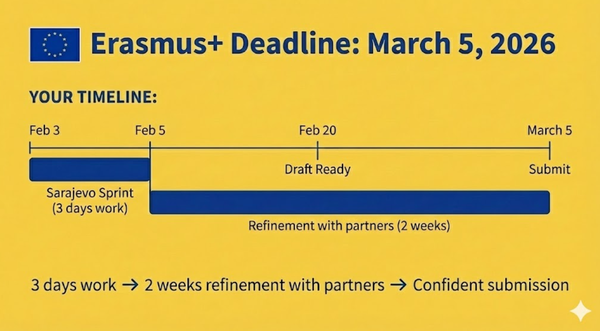
With us: 3 days → 2 weeks improvement cycles → Confident submission
This is the ⚠️ LAST workshop before the March 5 deadline.
20-person limit ensures quality feedback.
The 2026 Policy Evolution
Strategic Standards Redefined
Current project design focuses primarily on activities and outputs as the main indicators of success.
By 2026, the European policy landscape will transition toward a more sophisticated model of social impact.
Evaluation now prioritizes the project's long-term outcomes over its immediate implementation. Strategic results are the primary value drivers.
We facilitate the transition from standard participation metrics toward validated social impact measurement. In this professional Academy, we implement two evidence-based frameworks to enhance proposal quality:
- The Behavioral Analysis Framework: Systematically address Capability, Opportunity, and Motivation to ensure that project interventions result in measurable, sustained adoption of new practices.
- Social Impact Measurement (SROI): Quantify project outcomes with precision. This methodology allows you to calculate the concrete social value delivered, validating the efficacy of every requested budget euro.
This is Europe's first Academy focused on integrating the new Adoption and Behavior Change policy requirements..
IT'S JANUARY.
(when we built this page)
The March 5 deadline is 8 weeks away
You have two options:
Most people will:
❌ Spend 10 weeks trying to figure it out alone
❌ Realize in Week 8 their sections don't align
❌ Submit rushed draft on March 4 at 11:50 PM
❌ Score 80 points (not enough anymore)
❌ Receive rejection in September
Covilha participants will:
✅ Spend 3 days in focused development (Feb 11-13)
✅ Have complete draft by Feb 20 (2 weeks before deadline)
✅ Use 2 weeks for partner refinement and quality checks
✅ Submit confidently on March 5
✅ Score 85-95 points
✅ Receive approval in September
The difference isn't intelligence or effort.
It's working with proven methodology + expert guidance + AI support
instead of trying to decode the Programme Guide alone.
Additional Value
The 4X multiplyer system
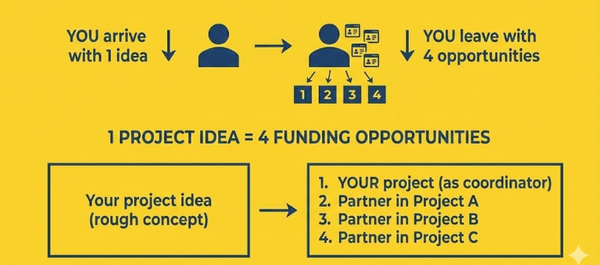
How do we achieve this multiplication in only 3 days?
Day 1 evening
Project pitching
After intensive work, structured pitching event:
3-min presentations
Target group
Needed expertise
Partnership gaps
20 organizations in the room.
Someone has what you need.
Days 1-3
Bohemian corner
Between sessions, partnerships form:
"Your disability approach fits my employability project
"Your methodology strengthens my VET approach"
Over coffee, partnerships become agreements.
By day 3
you leave with
YOUR project - complete draft
Partnership in Project #1
Partnership in Project #2
Partnership in Project #3
Same 3 days.
4x opportunities for you.
20 projects developed.
New Project Writing Approach
Our Proven 26 steps Formula + AI Power + Your New Network
For decades, we've honed our E+ project writing expertise. Now, we've combined it with cutting-edge technology and built a network of like-minded professionals. This powerful combination will increase your chances of securing funding and collaborating on impactful projects. It's your turn now to reap the benefits.
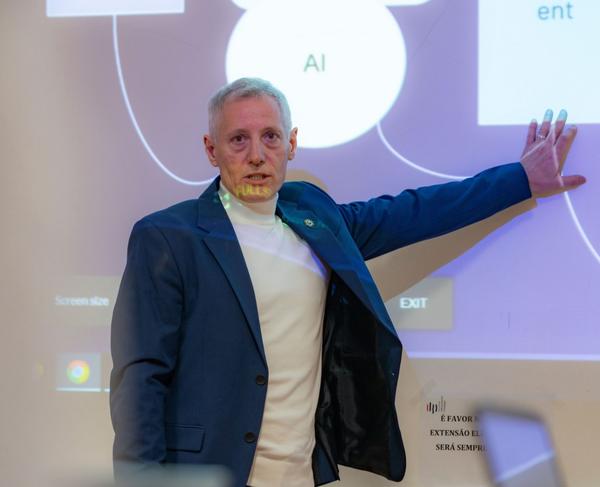
25 Years of Proven Methodology in Action
Break free from outdated methods. Let me guide you with my 25 years of experience to master the essential elements of impactful EU proposals and avoid common pitfalls.
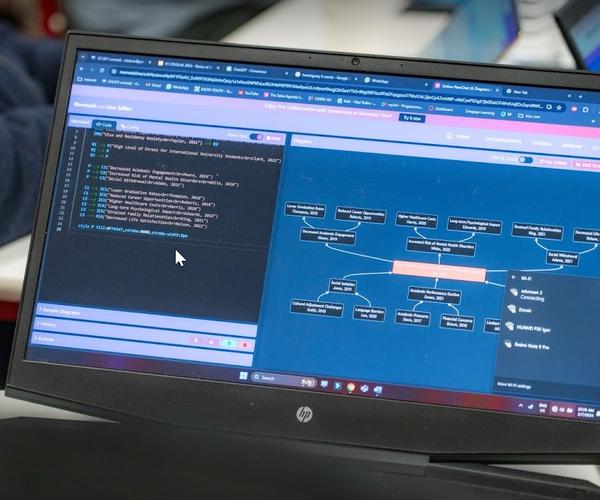
Leverage AI for Winning E+ Proposals
Integrate AI responsibly, aligning with the EU's focus on human oversight. AI should empowers your expertise, not replaces it. Learn how to train AI with diverse, high-quality data to avoid bias and to improve quality of your application. AI should be your collaborative power.
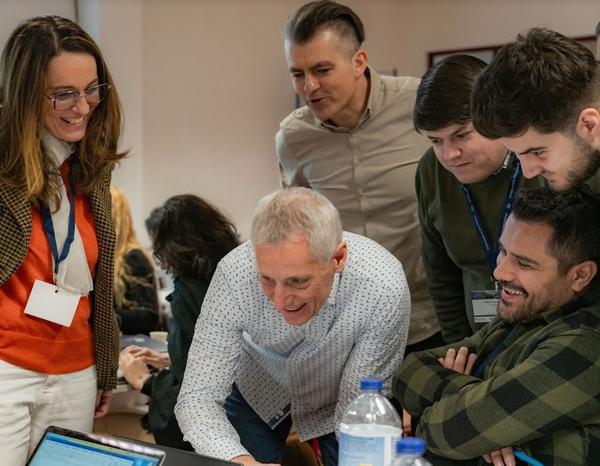
Collaborate for Success: Partner with Like-Minded People
Our workshop doesn't just teach you how to write a winning proposal - it connects you with a vibrant community ready to collaborate. Leave the workshop not only with the knowledge to write your own proposal but also with new connections that could lead to multiple successful applications.
Meet your hosts
25+ years of EU Project Excellence
Hosted by Smart Centar
The NECE is the premier Research Centre for Business Sciences at the University of Beira Interior (UBI), located in the historic mountain city of Covilhã, Portugal. As a multidisciplinary hub for innovation, we are dedicated to bridging the gap between academic excellence and real-world impact, fostering strong relations between the University, industry, and the community.
Specializing in entrepreneurship, competitiveness, and organizational management, NECE is a benchmark for excellence in research and professional capacitation. We empower researchers, professionals, and organizations through advanced training and international collaboration, integrating cutting-edge fields like neuroscience and data science to drive social innovation and sustainable development across Europe.

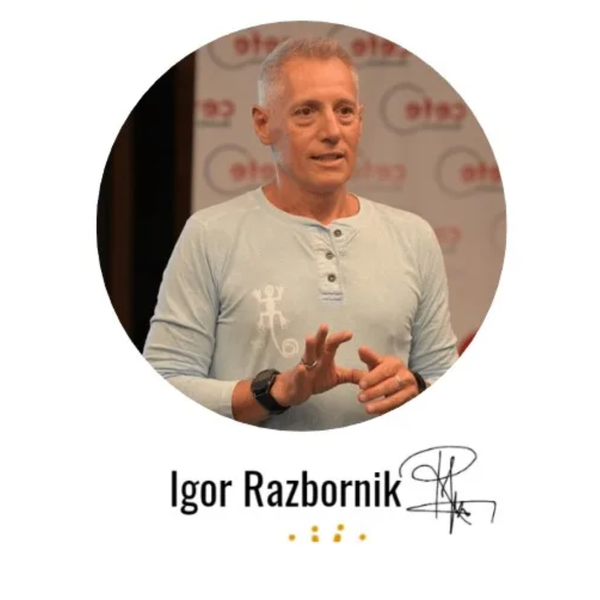
Trained by Igor Razbornik
Igor Razbornik is an EU project writing trainer with 25+ years of experience who helps organisations sharpen their ideas and write stronger proposals - in only 4 days.
Igor’s 26 Steps Project Writing Methodology is a practical system for turning rough ideas into clear, fundable EU projects. Paired with AI tools and his project evaluation approach, it brings speed, structure, and focus to every proposal.
With hands-on experience in Erasmus+ and other programmes, his sessions are built around doing the real work: drafting, editing, and improving text with practical tools that stick.