Strategic EU-projects design

AI Project Writing Academy

Together we develop 20 projects in 3 days using the WinCode methodology.

Each participant builds one complete proposal while forming strategic partnerships. Will you develop one of these projects with us?


Hosted by Smart Centar

The SMART Centar is the specialized educational hub of the Center for Civil Society Promotion (CPCD), a leading organization based in Sarajevo dedicated to strengthening civil society across the Western Balkans. Since 2006, we have served as a premier destination for professional capacity building and organizational development.

As an accredited center for adult education, we specialize in empowering individuals, NGOs, and public institutions through advanced training in EU project drafting, management, and advocacy. We are the driving force behind major regional initiatives, including the SMART Balkans project, connecting changemakers with the resources they need to succeed.
 

Image

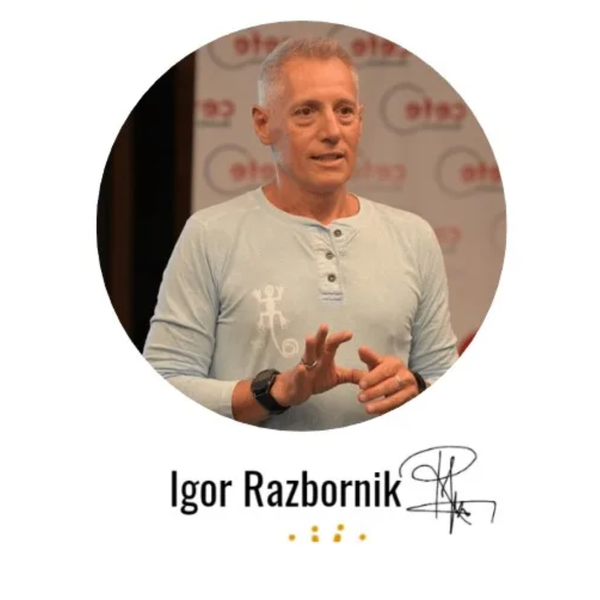
Trained by Igor Razbornik

Igor Razbornik is an EU project writing trainer with 25+ years of experience who helps organisations sharpen their ideas and write stronger proposals - in only 4 days. 

Igor’s 26 Steps Project Writing Methodology is a practical system for turning rough ideas into clear, fundable EU projects. Paired with AI tools and his project evaluation approach, it brings speed, structure, and focus to every proposal. 

With hands-on experience in Erasmus+ and other programmes, his sessions are built around doing the real work: drafting, editing, and improving text with practical tools that stick.

Image


Registration


Sarajevo

Bosnia and Herzegovina
11th to 13th of February, 2026


Follow link bellow for the registration process.

Total Course Price: 1200 Eur


How Our Registration Works


1.

Secure Your Spot

Request the pro-forma invoice for the full 1200 EUR registration fee to reserve your place in the training.


2.

Confirmation

We will confirm your registration shortly after the payment is received.

.


3. 

Full Refund Guarantee

If we are unable to confirm your place for any reason, your 1200 EUR payment will be fully refunded.

Please note: Refunds are only issued if the organizer cannot confirm your registration. 

Participant-initiated cancellations are not eligible for a refundfund.



See what our participants are saying

Their 4-Day Journey: Mindset Shifts and Real Results

Our transformative 4-day program isn't just about theory; it's about real change. Witness the impact firsthand through real participant testimonials. See their mindset shifts, breakthroughs, and the tangible results they achieved


Course overview

Three training days and two online meetings for follow-up


    Day 1:   

The Diagnosis – Decoding Behavior & Defining the "Why"

Goal: Stop designing for "activities" and start designing for "adoption." We use the COM-B model to rewrite the Problem, Target Group, and Needs Analysis.

The 2026 Paradigm Shift: Understanding why EU policy is moving from "dissemination" metrics to "behavior adoption" metrics.

Intro to COM-B: The Capability, Opportunity, Motivation framework—identifying why your previous target groups didn't change.

Using Miles: Partner with our custom AI to make project design an enjoyable task.

Behavioral Segmentation (Steps 4 & 5): Moving beyond demographics to segment users by their "Behavioral Barriers".

The Behavioral Gap Map (Step 6): Replacing the standard "Problem Tree" with a map of Current Behavior vs. Desired Behavior.

The Impact Pathway (Step 12): Mapping the logical journey from "Training Input" to "Behavioral Output".

   Day 2:   

The Architecture – Designing Interventions, Not Just Activities

Goal: Build the solution structure. We use the Impact Pathway to ensure every Work Package triggers a specific Capability, Opportunity, or Motivation change.

Designing Interventions (Step 14): Structuring Work Packages as "Interventions" that specifically support COM-B analysis

AI Co-Design: Using Miles to draft a "Motivation-focused" Work Package that ensures users actually apply what they learn.

Tangible Results vs. Impact: Distinguishing between what you produce (PDFs) and what remains (Habits).

Peer "Adoption" Review: Testing your Work Packages—do they actually solve the behavioral barriers identified on Day 1?

Risk Management (Step 16): Identifying "Unquestioned Assumptions" about user motivation that could kill the project.

From KPIs to KVIs: replacing traditional KPIs with KVIs—Key Value Indicators that quantify your social return on investment, proving impact in euros of value created per euro invested.

    Day 3:   

The Value – SROI approach & The Perfect Narrative

Goal: Prove the project is worth it. We use different aproaches to craft a narrative that overcomes "evaluator skepticism" and proves you are a high-capability partner, supported by rigorous SROI calculations.

The Mathematics of Good (SROI): Introduction to Social Return on Investment—how to calculate the economic value of your impact .

Using Miles: Partner with Miles to prepare and audit your writing —teaching the AI to flag vague language and replace it with high-trust, expert-level evidence.

The Innovation Argument (Step 18): Positioning your new COM-B methodology not just as a feature, but as a strategic signal of high-quality project design.

Quantifying the Intangible (Step 22) - KVIs: Selecting indicators that signal "Adoption" (behavior change) rather than just "Attendance" (activity), proving you understand the 2026 policy shift.

The Final Pitch: Launching your new, policy-aligned project idea into the shared database with a narrative that demands attention.